
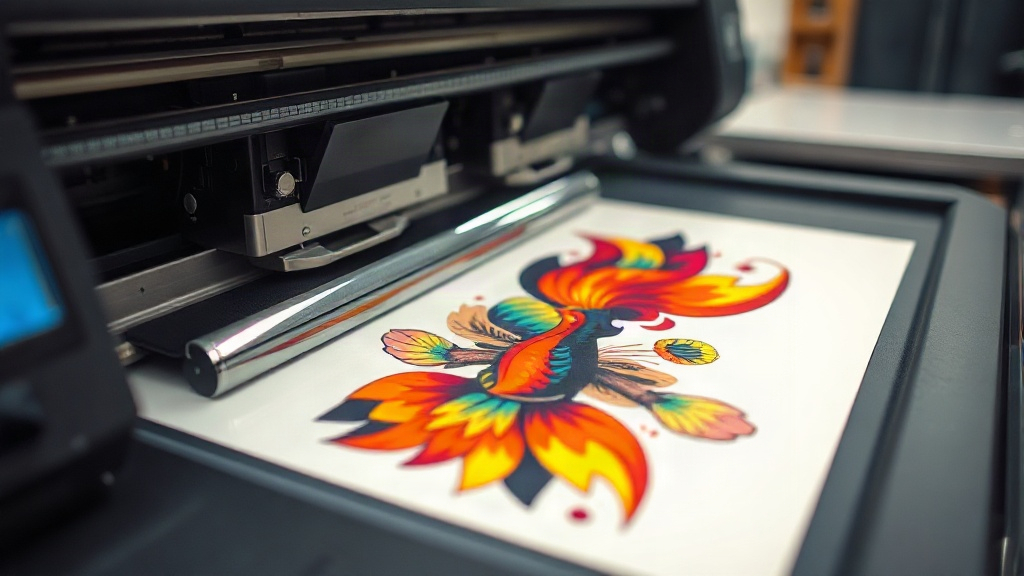
If you've been exploring custom apparel for your e-commerce store, you've likely encountered the term DTF. Direct-to-film printing is quickly becoming the go-to method for sellers who want vibrant, durable designs without the hassle of inventory. Unlike traditional screen printing, DTF lets you print full-color graphics on demand, one shirt at a time. In this guide, I'll walk you through exactly how DTF works, what it costs, and how to use it effectively for your print on demand business.
What Exactly Is DTF Printing?
DTF stands for Direct-to-Film. It's a printing technique where your design is printed onto a special transfer film using water-based pigments. After printing, a hot-melt powder adhesive is applied to the wet ink, and the film is cured. The resulting transfer can then be heat-pressed onto fabrics like cotton, polyester, and blends. Unlike DTG (Direct-to-Garment), DTF doesn't require pre-treatment, and it works on dark colors just as well as light ones. That versatility is why so many print on demand sellers are switching to DTF.
Why DTF Is a Game-Changer for Print on Demand
Print on demand is all about flexibility: you only produce items after a customer orders. DTF fits this model perfectly because it requires no minimums and no setup fees. You can print a single transfer for a one-off order or hundreds for a bulk project. Here are the main advantages:
- No color limitations: DTF can reproduce gradients, photographs, and fine details with ease.
- Fabric versatility: Works on cotton, polyester, nylon, leather, and even some treated glass.
- Durability: When applied correctly, DTF transfers survive dozens of washes without cracking or fading.
- Cost-effective for small runs: No screens or plates needed, so short runs are affordable.
- Fast turnaround: Once you have a printer, you can produce transfers in minutes.
For a print on demand store, these benefits mean you can offer a wider range of products without holding stock. You can list designs on t-shirts, hoodies, tote bags, and more, and only produce them when an order comes in.
How DTF Printing Works: Step by Step
Understanding the process helps you communicate with your printing partner or set up your own production. Here's what happens from design to finished product.
1. Design Preparation
Your design should be created in a vector format or high-resolution raster (300 DPI). DTF printers use CMYK inks plus white, so you need to prepare your file with a white underbase if printing on dark fabrics. Most RIP software handles this automatically, but it's good to know. Also, mirror your design horizontally before printing, because you'll press it face-down onto the garment.
2. Printing onto Film
The printer lays down a layer of white ink first, followed by CMYK colors. This white layer acts as a base so colors pop on dark shirts. The film is then dusted with a hot-melt adhesive powder, which is shaken off and melted in a curing oven. The result is a flexible, dry transfer ready for pressing.
3. Heat Press Application
Set your heat press to around 160°C (320°F) with medium pressure. Place the transfer face-down on the garment, press for 10-15 seconds, then peel the film off while it's still warm (warm peel) or after it cools (cold peel), depending on the film type. Finally, press again for a few seconds with a protective sheet to ensure the adhesive fully bonds.
DTF vs. Other Printing Methods
How does DTF stack up against DTG, screen printing, and vinyl? Here's a quick comparison:
- DTG: Great for 100% cotton, but requires pre-treatment and often struggles with vivid colors on dark shirts. DTF wins on dark fabrics and blends.
- Screen Printing: Cheaper for large runs, but setup costs make it impractical for one-offs. DTF is better for small batches.
- Heat Transfer Vinyl: Limited to one color per layer and not ideal for complex designs. DTF handles full-color images effortlessly.
For print on demand, where orders are unpredictable and designs vary, DTF offers the best balance of quality, cost, and flexibility.
Cost Breakdown: What to Expect
If you're outsourcing DTF transfers, expect to pay around $2 to $5 per A4-sized transfer, depending on quantity and supplier. The garment itself might cost $3 to $10 wholesale, and you'll add shipping and your profit margin. If you invest in your own DTF printer, a decent starter model costs $3,000 to $8,000, plus consumables (film, ink, powder). For most beginners, partnering with a DTF printing service is more practical until you validate your designs.
Design Tips for Stunning DTF Prints
To get the most out of DTF, keep these tips in mind:
- Use high-contrast colors: DTF reproduces bright hues well, so don't be afraid of bold palettes.
- Avoid super-fine lines: Very thin lines (below 0.5 pt) may not hold up. Thicken them slightly.
- Test on different fabrics: DTF looks slightly different on cotton vs. polyester. Order samples to see the results.
- Consider the white underbase: For dark garments, your design needs a white layer. Ensure your file includes it or your printer adds it.
I once designed a detailed watercolor illustration for a client's hoodie. The first sample lacked a proper white base, so the colors looked muddy. After adding the underbase, the print popped beautifully. That's the kind of detail that makes DTF both forgiving and demanding.
Common Mistakes to Avoid
Even with a straightforward process, pitfalls exist. Here are a few I've seen:
- Insufficient pressure or temperature: Leads to poor adhesion and early peeling.
- Not pre-pressing the garment: Moisture and wrinkles can ruin the transfer. Always pre-press for 5 seconds.
- Using the wrong film: Some films are designed for cold peel, others for warm peel. Follow the manufacturer's instructions.
- Over-stretching the garment: DTF transfers have some stretch, but extreme stretching can crack the print.
Frequently Asked Questions About DTF Printing
How long does a DTF print last?
With proper application and care (washing inside out, cold water, no harsh bleach), a DTF print can last 50+ washes. The key is following the pressing instructions and avoiding excessive heat when drying.
Can I use DTF on 100% polyester?
Yes, DTF works well on polyester, but you may need to adjust pressing temperature (slightly lower, around 150°C) to avoid scorching. Always test on a scrap piece first.
Do I need a special printer for DTF?
You need a printer that uses DTF inks and can handle film. Some sellers convert Epson printers with DTF ink systems, while others buy dedicated DTF printers. For beginners, outsourcing to a DTF service is often more cost-effective.
What's the difference between DTF and DTG?
DTF transfers are printed on film and then heat-pressed, while DTG prints directly onto the garment. DTF offers better color vibrancy on dark fabrics and works on more materials, but DTG can be simpler for 100% cotton light-colored shirts.
Is DTF printing eco-friendly?
DTF uses water-based inks, which are generally more environmentally friendly than plastisol or solvent inks. However, the film and powder do create some waste, so recycling programs are emerging. It's a step in the right direction.
Final Thoughts
DTF printing has opened doors for print on demand sellers who want high-quality, full-color designs without inventory risk. Whether you outsource or bring it in-house, understanding the process helps you make informed decisions. Start with a few test prints, refine your designs, and watch your custom apparel business grow.