
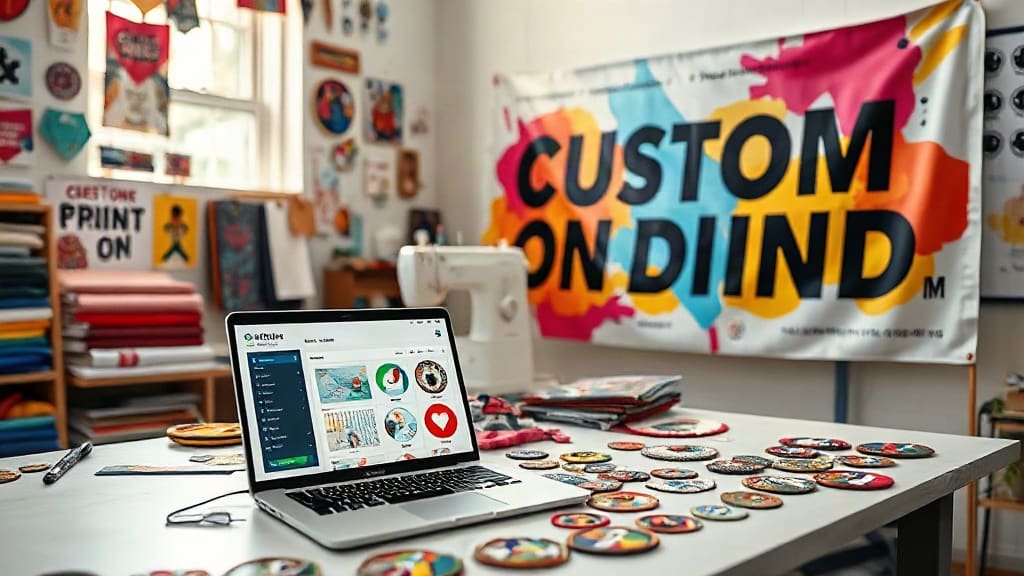
If you have ever wanted to sell your own designs but dreaded the thought of holding inventory, print on demand might be the answer you have been looking for. This business model lets you create products only after a customer places an order, which means no upfront stock and no risk of unsold goods piling up in your garage. Among the most exciting products you can offer are custom patches and custom banner prints. These items have a loyal audience, from hobbyist groups to small businesses looking to boost their visibility. In this guide, we will walk through how print on demand works for these two product categories, what to watch out for, and how to make your offerings stand out.
Why Print on Demand Is a Game Changer for Custom Patches and Banners
Traditional manufacturing requires you to predict demand, order in bulk, and store everything. That model works for large companies, but it is a nightmare for independent creators. Print on demand flips the script: you upload your designs to a platform, and when someone buys, the platform prints and ships the item. Your profit is the difference between the retail price and the production cost. For custom patches, this means you can offer dozens of designs without ever touching a sewing machine. For custom banner products, you can provide large-format prints without worrying about shipping tubes or storage space.
No Inventory, No Risk
The biggest advantage is zero inventory. You do not pay for products until they are sold. This lowers your barrier to entry and lets you test new designs quickly. If a particular custom patch design does not sell, you simply remove it. There is no leftover stock to discount or discard.
Scalability and Flexibility
As your audience grows, print on demand scales with you. Whether you sell ten custom banner prints or ten thousand, the process remains the same. You can also expand into new product types, like embroidered hats or tote bags, without changing your workflow.
How to Design Custom Patches That Sell
Custom patches are small but mighty. They appeal to motorcycle clubs, scout troops, gaming communities, and even corporate teams. To succeed, you need designs that resonate with these groups. Start by researching what your target audience likes. For example, biker patches often feature eagles, skulls, or flames, while scout patches might include nature motifs or badges. Use bold colors and clear outlines because patches are often viewed from a distance. Also, consider the shape: round, rectangular, and shield shapes are popular. When you use a print on demand service, you can offer different sizes and backing options (iron-on, velcro, sew-on) to cater to various needs.
Choosing the Right Materials
Not all patches are created equal. Embroidered patches have a classic look but can be more expensive. Printed patches allow for complex gradients and fine details. Some print on demand providers offer both. Test samples to see which quality meets your standards. Remember, your customers will judge your brand by the feel and durability of the patch.
Pricing Strategies for Custom Patches
Pricing is tricky. You want to be competitive but also profitable. A good rule is to aim for a 2.5x to 3x markup on your production cost. For example, if a custom patch costs $4 to produce, sell it for $10 to $12. Offer bundle discounts to increase average order value. Also, factor in shipping costs; some platforms charge extra for shipping, which can eat into your margins.
Creating Custom Banners for Events and Businesses
Custom banner printing is another lucrative niche. Businesses need banners for trade shows, storefronts, and special events. Sports teams use them for stadiums. Individuals order them for birthdays and weddings. With print on demand, you can offer a variety of sizes, from small yard signs to large building wraps. The key is to provide templates or design services that make it easy for customers to order. Many print on demand platforms integrate with design tools, allowing customers to upload their own artwork or customize a template.
Popular Banner Types and Their Uses
Vinyl banners are the most common; they are durable and weather-resistant. Mesh banners allow wind to pass through, making them ideal for fences. Fabric banners offer a premium look for indoor events. When you offer custom banner products, specify the material, size, and finishing options (grommets, pole pockets, etc.). This helps customers make informed decisions and reduces returns.
Marketing Your Banner Printing Services
To attract business clients, create a portfolio showcasing your best custom banner work. Use social media to display before-and-after shots of events. Offer a quick turnaround and competitive pricing. Since print on demand handles production, you can focus on marketing and customer service. Consider partnering with event planners or local print shops to get referrals.
Integrating Print on Demand with Your E-commerce Store
Most print on demand services integrate seamlessly with platforms like Shopify, Etsy, and WooCommerce. You connect your store, upload designs, and set prices. When an order comes in, the POD service fulfills it automatically. This automation frees you to focus on design and marketing. For custom patches and custom banner products, ensure the integration supports the necessary options, such as size and material selection.
Tips for a Smooth Integration
- Read reviews of the POD provider to ensure reliability.
- Test the ordering process yourself before launching.
- Set clear shipping expectations on your product pages.
- Use high-quality mockups to show what the final product looks like.
Common Pitfalls to Avoid
While print on demand is convenient, it has challenges. Quality control can vary, so order samples. Shipping times may be longer than expected, especially for international orders. Also, some POD providers have limited customization options for custom patches and custom banner prints. Always have a backup provider in case of stock issues or delays.
Quality Control and Customer Service
Your reputation depends on the quality of the final product. Even though you do not handle production, you are responsible for customer satisfaction. Offer a clear return policy and respond promptly to inquiries. If a custom patch arrives defective, replace it quickly. Good service leads to repeat business and positive reviews.
Frequently Asked Questions
What is print on demand and how does it work for custom patches?
Print on demand is a fulfillment method where products are made only after an order is placed. For custom patches, you upload your design to a POD platform, and when a customer buys, the platform produces and ships the patch. You earn the difference between the retail price and the production cost.
Can I create custom banner designs without graphic design skills?
Yes. Many print on demand services offer templates and design tools that let you customize custom banner products easily. You can also hire freelance designers if you need unique artwork.
How do I price my custom patches and banners for profit?
Calculate your production cost and aim for a 2.5x to 3x markup. Research competitors to stay competitive. Offer bundles and upsells to increase order value. Remember to factor in shipping and platform fees.
What are the best print on demand platforms for patches and banners?
Popular options include Printful, Printify, and Gooten. Each has different product catalogs and pricing. Compare their custom patches and custom banner offerings, shipping times, and integration options to find the best fit for your business.
How can I market my custom patches and banners effectively?
Use social media to showcase your designs. Target niche communities like biker groups or sports teams. Create a website with a portfolio. Offer discounts for first-time customers. Collaborate with influencers who align with your brand.