
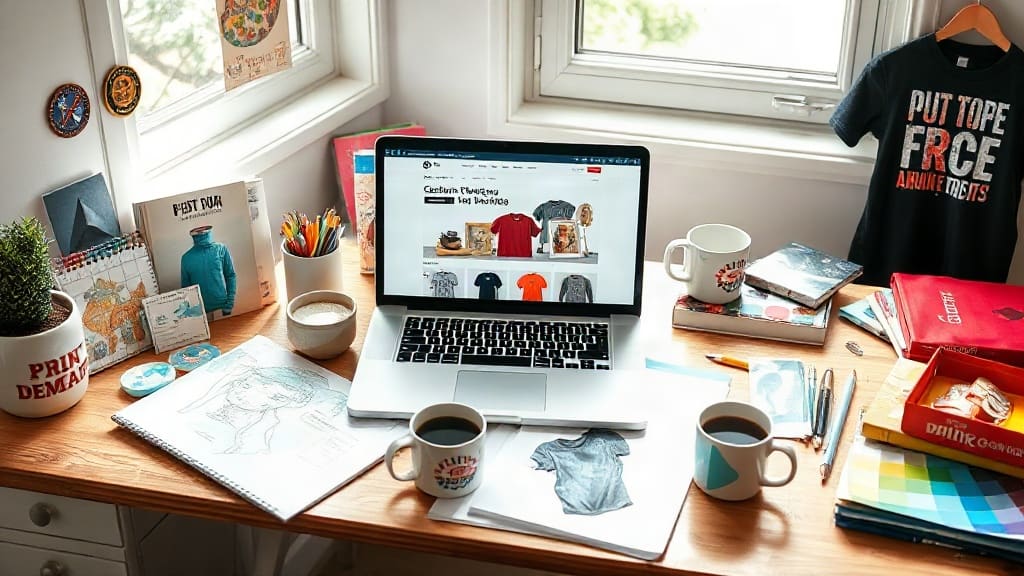
Print on demand has revolutionized the way entrepreneurs start online businesses. If you have a creative idea but don't want to deal with inventory or upfront costs, this model might be perfect for you. In this comprehensive guide, we'll walk you through every step of launching a successful print on demand business. You'll learn about choosing the right products, finding a reliable supplier, creating compelling designs, and marketing your store effectively. Whether you're a beginner or looking to scale an existing operation, you'll find actionable insights here.
Print on demand allows you to sell custom products without holding any stock. When a customer places an order, the product is printed and shipped by a third-party supplier. This eliminates the risk of unsold inventory and makes it easy to test multiple designs. However, success doesn't come automatically. You need a solid strategy, quality products, and effective marketing. In this guide, we'll cover everything from niche selection to customer retention.
Why Print on Demand is a Great Business Model
The print on demand industry has grown exponentially over the past few years. According to a report by Grand View Research, the global print on demand market size was valued at $4.9 billion in 2022 and is expected to expand at a compound annual growth rate (CAGR) of 25.4% from 2023 to 2030. This growth is driven by the increasing preference for personalized products and the rise of e-commerce.
One of the biggest advantages of print on demand is the low barrier to entry. You don't need a large budget to start. You can set up a store with platforms like Shopify, Etsy, or WooCommerce and integrate with a print on demand service. Additionally, you can work from anywhere as long as you have an internet connection.
Choosing Your Niche
Selecting a profitable niche is crucial for your print on demand business. A niche is a specific segment of the market that you target with your products. To choose a niche, consider your interests, the market demand, and the level of competition. Here are some tips:
- Identify your passions and expertise. Selling products you're passionate about will keep you motivated.
- Research trends using tools like Google Trends, Pinterest, and social media platforms.
- Look for niches with an engaged audience but not overly saturated. For example, instead of just "fitness," consider "yoga for men" or "crossfit for women."
- Consider seasonal niches to capitalize on holidays and events.
Once you've chosen a niche, you can create products that resonate with that audience. For example, if you choose a niche around outdoor enthusiasts, you might offer custom patches for backpacks and jackets, as well as custom banners for camping events.
Product Selection: What to Sell
Print on demand offers a wide range of products beyond t-shirts. You can sell custom patches, custom banners, mugs, phone cases, posters, hoodies, and more. The key is to select products that align with your niche and have good profit margins.
Custom Patches
Custom patches have become increasingly popular, especially among hobbyists, sports teams, and businesses. They can be used to personalize clothing, bags, and accessories. With print on demand, you can offer embroidered patches or woven patches without minimum order quantities. This makes it easy to test different designs and cater to a niche audience. For example, you could create patches for scouting groups, military veterans, or fashion enthusiasts.
Custom Banners
Custom banners are another excellent product for print on demand. They are used for events, promotions, and decorations. Businesses often order banners for trade shows, storefronts, or special occasions. You can offer a variety of sizes and materials, such as vinyl or fabric. This product works well for B2B niches or event-related markets.
When choosing products, consider the production time, shipping costs, and print quality. Some products have higher margins than others. For instance, accessories like patches have low production costs but can be sold at a premium due to their perceived value.
Finding a Reliable Print on Demand Supplier
Your supplier plays a critical role in your business. They handle printing, packaging, and shipping, so you need to ensure they deliver quality and reliability. Here are some popular print on demand suppliers:
- Printful: Known for its high-quality products and integrations with major e-commerce platforms.
- Printify: Offers a wide network of print providers, giving you flexibility in pricing and shipping.
- Gooten: Provides a global network and a user-friendly API.
- CustomCat: Offers a large catalog and fast turnaround times.
- Nurun: Specializes in custom patches and embroidery.
When evaluating suppliers, consider factors such as product quality, shipping times, customer reviews, and sample availability. It's wise to order samples yourself to check the print quality and feel of the products. This will also help you create better product photos for your store.
Creating High-Quality Designs
Design is the heart of print on demand. Your designs need to appeal to your target audience and stand out from the competition. Here are some tips for creating designs that sell:
- Keep your target customer in mind. What messages, styles, and colors would they like?
- Use design tools like Adobe Illustrator, Photoshop, or Canva. If you're not a designer, consider hiring freelancers from platforms like Fiverr or 99designs.
- Ensure your designs are high resolution (at least 300 DPI) for crisp printing.
- Test different design variations to see what resonates.
- Stay updated with design trends but also create timeless designs.
For custom patches, you need to think about the size, shape, and border details. For custom banners, consider the aspect ratio and readability from a distance. Always check the specifications provided by your supplier to avoid errors.
Setting Up Your Online Store
To sell your products, you need an online store. Here are the steps to set up your store:
- Choose an e-commerce platform: Shopify is user-friendly and integrates with most print on demand apps. Etsy is great for reaching a large customer base, especially for handmade and custom items. WooCommerce is a flexible option if you already use WordPress.
- Register a domain name that reflects your brand.
- Install a print on demand app from your chosen supplier.
- Import products from your supplier to your store. You can edit the product descriptions and images.
- Set your pricing: factor in the product cost, shipping, and your desired profit margin. Research your competitors to stay competitive.
- Create important pages such as About Us, Contact, Shipping Policy, and Return Policy.
Make sure your store is visually appealing and easy to navigate. High-quality product images and clear descriptions can significantly increase conversion rates.
Pricing Your Products
Pricing is a delicate balance. You want to attract customers but also make a profit. A common strategy is to use a cost-plus approach: product cost + shipping cost + desired profit = selling price. However, you also need to consider perceived value and competitor pricing.
For example, if a custom patch costs $4 to produce and ships for $3, and you want to earn $5, you'd price it at $12. But if competitors are selling similar patches for $9, you might need to adjust. Alternatively, you can offer bundles or upsells to increase average order value.
Marketing Your Print on Demand Business
Once your store is ready, you need to drive traffic. Effective marketing strategies include:
Social Media Marketing
Platforms like Instagram, Pinterest, and TikTok are ideal for showcasing your products. Create engaging content that highlights your designs and behind-the-scenes processes. Use relevant hashtags to reach a broader audience. Collaborate with influencers in your niche to gain credibility.
Search Engine Optimization (SEO)
Optimize your product pages and blog posts for search engines. Use relevant keywords in your titles, descriptions, and content. For example, if you sell custom patches, include phrases like "custom patches" and "embroidered patches" naturally in your text. This will help you rank higher in search results and attract organic traffic.
Email Marketing
Build an email list from the start. Offer a discount code in exchange for sign-ups. Send regular newsletters with new designs, promotions, and valuable content. This helps in building a loyal customer base.
Paid Advertising
Consider running ads on Google or Facebook to reach a targeted audience. Start with a small budget and test different ad creatives. Track your return on ad spend (ROAS) to optimize campaigns.
Content Marketing
Write blog posts or create videos that address common questions or trends in your niche. For example, you could write about "How to Design Custom Patches" or "Custom Banners for Your Next Event." This establishes you as an authority and drives organic traffic.
Managing Orders and Customer Service
Once you start receiving orders, it's essential to manage them efficiently. Your print on demand supplier will handle fulfillment, but you need to monitor order status and communicate with customers if there are any issues. Provide excellent customer service by responding to queries promptly and resolving any problems. This will help you build a positive reputation and encourage repeat purchases.
Automation tools can help. Many e-commerce platforms allow you to set up automated order updates and email notifications. This reduces the manual work and ensures customers are informed about their order status.
Scaling Your Business
As your business grows, you may consider scaling up. Here are some strategies:
- Expand your product range: Add new products that complement your existing ones.
- Target new markets: Consider selling internationally or on multiple platforms.
- Invest in paid advertising: Increase your ad budget once you have proven ROI.
- Optimize your store for conversions: Use A/B testing to improve your website's performance.
- Build a brand: Create a strong brand identity that resonates with your audience.
Remember to keep track of your finances. Use accounting software to monitor your income and expenses. This will help you make informed decisions about your business.
Overcoming Common Challenges
Print on demand is not without challenges. Common issues include:
- Intense competition: Differentiate yourself with unique designs or a specific niche.
- Quality control: Order samples and work with reliable suppliers to maintain quality.
- Shipping times: Clearly state shipping times on your product pages to manage expectations.
- Returns: Have a clear return policy and handle returns promptly.
By anticipating these challenges, you can be better prepared to handle them.
Frequently Asked Questions
What is the profit margin in print on demand?
Profit margins vary depending on the product and your pricing strategy. Typically, you can expect a profit margin of 20% to 40%. For custom patches and banners, margins can be higher if you source cost-effective suppliers. It's important to calculate your costs accurately and price accordingly.
Do I need to handle inventory with print on demand?
No, that's the beauty of print on demand. The supplier holds the inventory and only prints when an order is placed. This eliminates the need for you to purchase bulk inventory, saving you money and storage space.
Can I sell custom patches and custom banners without minimum order quantities?
Most print on demand suppliers offer no minimum order quantities. This means you can sell a single item at a time, which is ideal for testing designs. However, some suppliers may offer better pricing for bulk orders, but it's not required.
How long does shipping take?
Shipping times depend on the supplier's location and the destination. Typically, production takes 2-5 business days, and shipping can take 3-7 business days domestically and longer internationally. Always provide estimated shipping times to your customers.
Do I need a business license to sell print on demand?
It depends on your country and local regulations. Generally, you need a business license or permit to operate legally. Check with your local government to ensure compliance.
Starting a print on demand business is an exciting venture. By following this guide, you'll be well on your way to creating a successful online store. Remember to stay patient, continuously learn, and adapt to market trends. Good luck!